AI Compliance Platform
Conformis — EU AI Act Compliance
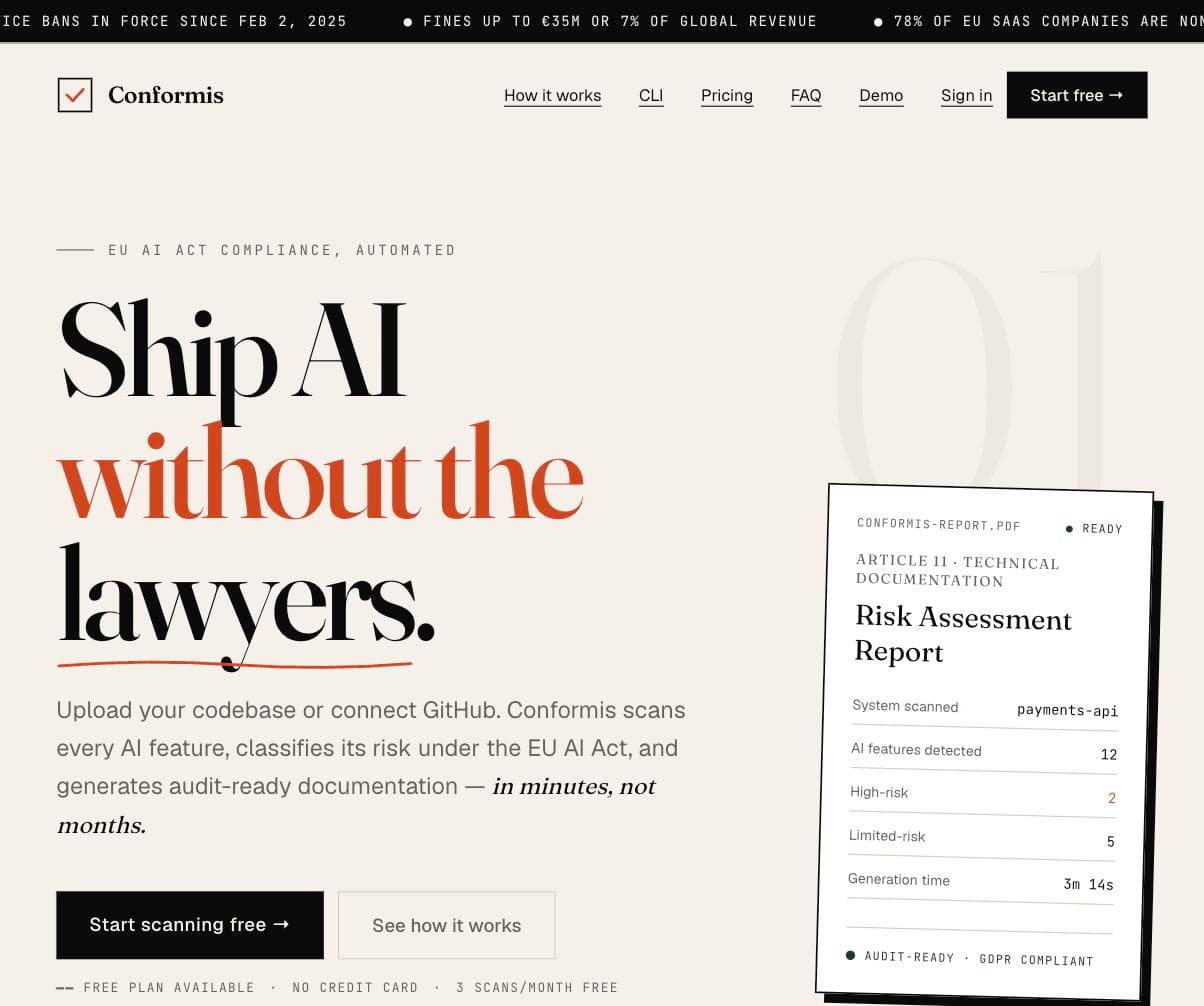
Ship AI without the lawyers — an automated EU AI Act compliance scanner that reads a codebase and produces a Risk Assessment Report.
Tech stack
The problem
The EU AI Act requires teams shipping AI features to classify their systems by risk tier and document that classification — today that's a slow, manual, expensive legal exercise most engineering teams aren't equipped to do themselves, and most don't start until a deal or audit forces the question.
How it works
Conformis scans a Python or TypeScript codebase directly, identifies where and how AI models are actually used in the application, and maps that usage against the EU AI Act's risk categories — no manual questionnaire, no outside consultant, just point it at a repository.
What it detects
The scan output is a structured Risk Assessment Report: each detected AI usage point is tagged with its EU AI Act risk tier, along with the specific code location driving that classification, so a team can see exactly what needs review before it becomes a compliance problem.
Tech stack
FastAPI backend, Next.js frontend, Claude for the code-understanding/classification layer, PostgreSQL for scan history and reports.
About the product
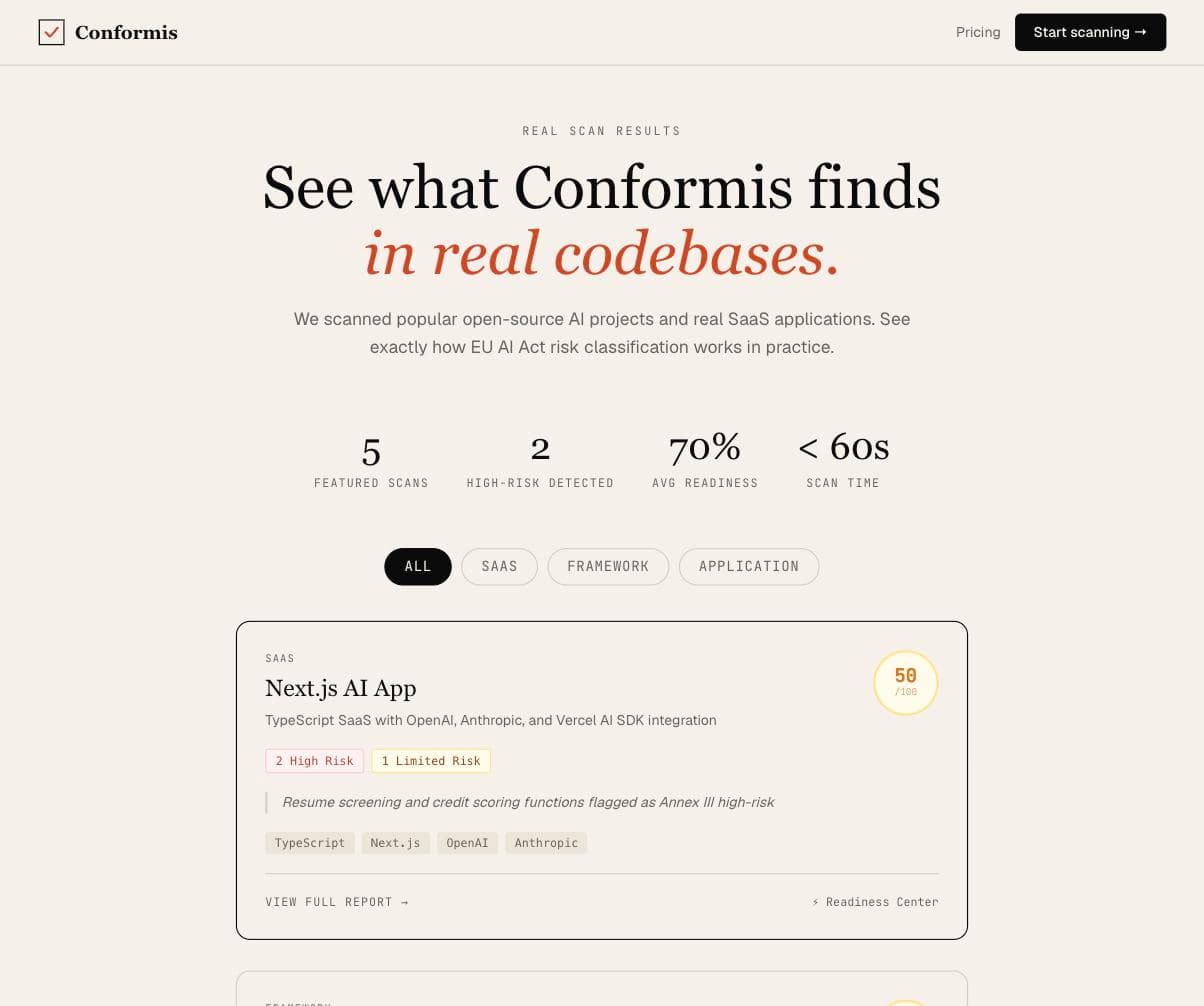
Conformis shipped as a real product at conformis.tech — the screenshots above are from that live gallery of example scans (LangChain, CrewAI). This write-up is a case study of the system design and the compliance problem it solves, not an interactive demo embedded in this portfolio.